
Volusia County Projected Release Meaning
Florida Department of Corrections uses Current Release Date on a current state-inmate profile. Florida Statute 944.275 calls the underlying calculation a tentative release date. Both terms describe a date that may change. FDC warns that gain-time awards, gain-time forfeitures, and review can alter the public field. A profile reading TO BE SET means FDC has not yet established the date after review.
Scheduled versus actual: Current Release Date is a forward-looking FDC calculation. Release Date and Date Out-Custody on the later release detail confirm that state custody ended.
The distinction matters in Volusia County. Tomoka Correctional Institution and Tomoka Work Camp are FDC facilities, so their scheduled releases belong in state records. Volusia County Branch Jail and Volusia County Correctional Facility use county custody records. A VCDC archive timestamp confirms the past end of one county booking, but the county publishes no public projected-date calculator.
Identify Volusia County Custody
Start with the facility and legal status. A pretrial detainee awaits court action and does not have a fixed sentence-release date. Bond, recognizance, pretrial supervision, dismissal, a hold, or a later sentence may determine the next step. A sentenced county inmate may have an end date based on the judgment and lawful jail credit. A state prisoner has an FDC computation. Federal and immigration custody use different systems entirely.
| Custody situation | Correct source | Date meaning |
|---|---|---|
| Volusia pretrial detention | Volusia Clerk, VCDC Booking, and court orders | No fixed date before the controlling event |
| Volusia county sentence | Sentencing order, jail credit, and VCDC Case Management | Locally calculated exit, later confirmed in archive |
| Tomoka or other FDC prison | FDC Inmate Population and Release Information | Current Release Date is projected; release detail confirms exit |
| Federal prison | BOP inmate locator | Federal projected or past release information |
| ICE custody | ICE detainee locator and detention line | Custody location, not a criminal sentence date |
A transfer is not the same as release to the community. If VCDC ends custody because FDC or another agency takes the person, follow the receiving custodian. Keep the VCDC booking number, court case number, and FDC DC number separate because each belongs to a different record system.
Find Volusia County Projected Release
For a state prisoner, begin with the FDC Inmate Population Search. It covers current FDC custody and displays scheduled date information. FDC says general population details refresh weekly while release-date and location changes update nightly. The separate Inmate Release Information Search covers people already released or scheduled for release and also updates nightly.
- Confirm whether the person is in VCDC, FDC, federal, or immigration custody. Do not start with FDC for an ordinary Volusia bond release.
- For FDC custody, search by DC number when possible. Otherwise use the full name and enough details to isolate the correct profile.
- Open the match and verify photograph, committed name, aliases, DC number, offense, county, case number, and current location.
- Read Current Release Date and any warning, detainer, sentence-history, or review information shown on the profile.
- For a county sentence, check the sentencing order and jail credit, then contact VCDC Case Management at 386-254-1548.
- After release, confirm FDC custody with Release Date and Date Out-Custody, or confirm county custody with the VCDC archive and official record.
The official FDC current-inmate form shown below is the proper starting screen for a state prisoner who has not yet left custody.
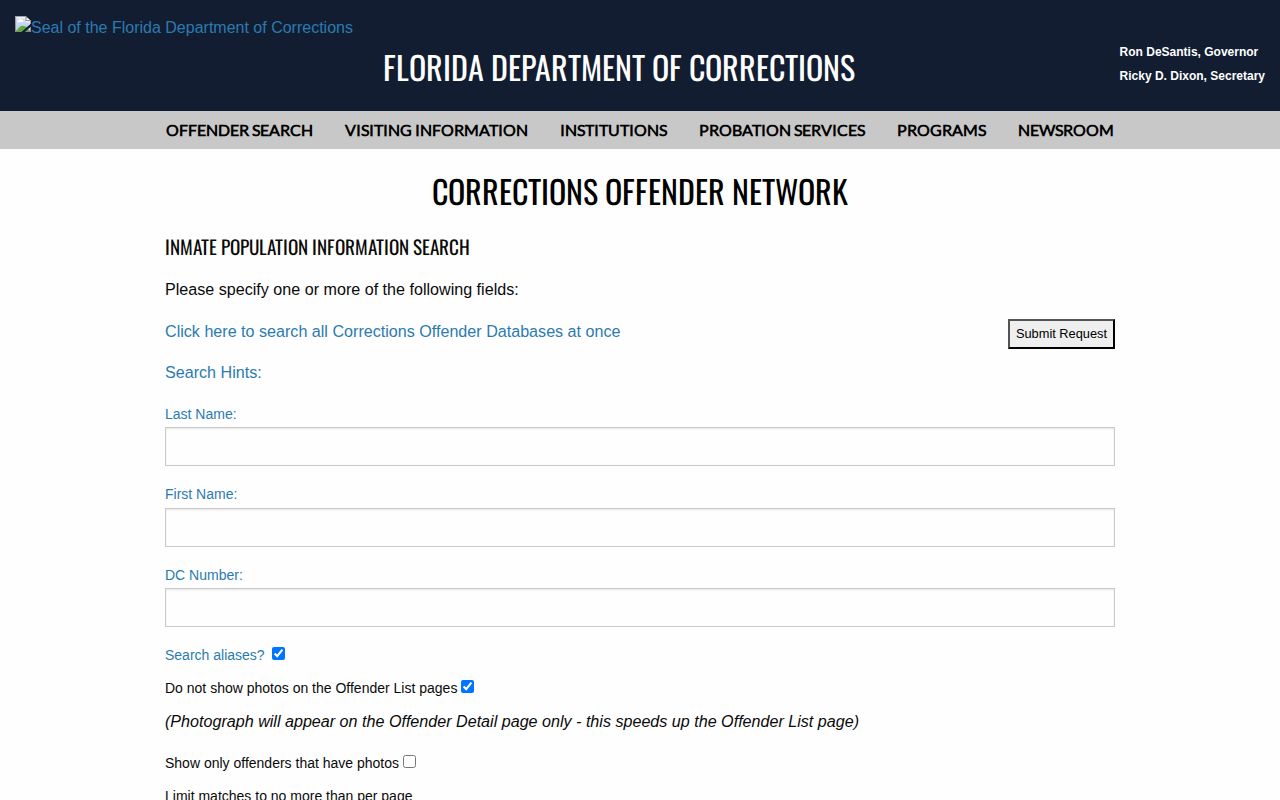
The search is statewide. It can cover a person at Tomoka, but it is not a Volusia County jail roster or a list of county releases.
Note: FDC updates release-date changes nightly, so check again after an expected date rather than treating a same-hour mismatch as final.
Florida Release Date Calculation
FDC first calculates a maximum sentence expiration date from the sentence and lawful jail or prison credit. It then establishes a tentative release date using gain-time that has been granted, forfeited, or restored. The tentative date cannot be later than maximum expiration. An escapee or parole violator returned to custody can have the maximum date extended for time out of custody plus a new sentence, less lawful credits.
These rules apply to state prison calculations. They do not calculate the release of a person serving only a Volusia County jail sentence. A county record may later show the exact release timestamp, but the reviewed VCDC sources publish neither a county gain-time policy nor a public projected-date tool. The sentencing order, credit awarded by the court, Case Management, and booking staff are the proper county channels.
- Maximum expiration
- The sentence end after lawful credit is applied, before a tentative release calculation shortens it.
- Tentative release date
- The statutory FDC computation after gain-time awards, loss, or restoration.
- Current Release Date
- The label shown on the public FDC profile for the operative projected date.
- Detainer
- A notice from another authority that may change where the person goes when one custodian releases them.
Volusia County Gain-Time Limits
Florida Statute 944.275 sets several gain-time categories for state prisoners. Basic gain-time is limited to offenses committed from July 1, 1978 through December 31, 1993. Incentive gain-time is discretionary and can reflect diligent work, training, or constructive activity. Its monthly cap depends on the offense date and former severity level. Meritorious gain-time may add one to sixty days for an outstanding deed or service, while a qualifying education award may add up to sixty incentive days.
The statute also lists exclusions and permits forfeiture for disciplinary infractions. Those limits prevent a universal formula. A profile can move earlier after lawful credit or an award, or later after forfeiture, review, an escape interval, new sentencing data, or a related order.
The 85 percent rule is a floor, not a calculator. For the post-October 1, 1995 incentive-gain-time group, gain-time generally cannot cause release before 85 percent of the sentence is served. Credit for time physically incarcerated counts toward that floor.
Florida Statute 921.002 supports the same truth-in-sentencing policy. Concurrent or consecutive terms, mandatory minimums, court credit, later sentences, statutory exclusions, restored or lost gain-time, release-plan review, detainers, and older parole law can still change the result. Multiplying a sentence by .85 does not produce a reliable personal release date.
Why Volusia Release Dates Change
A projected date is a live calculation, not an appointment at the gate. The relevant agency can update it when the sentence record, credit, conduct, or legal setting changes. A detainer may leave the FDC end date intact while changing the destination. Community supervision can also begin on the state custody-release date.
| Factor | Possible effect | Record to check |
|---|---|---|
| Gain-time award or restoration | May move the tentative date earlier within statutory limits | FDC profile and calculation history |
| Disciplinary forfeiture | May move the date later | FDC records and profile warning |
| New court order or sentence data | May change credit, sentence structure, or maximum expiration | Court docket and FDC calculation |
| Escape or violation interval | May extend the term under applicable law | FDC and commission records |
| Detainer or hold | May change the next custodian rather than the FDC end date | Detainer, VCDC/FDC, and receiving agency |
| Release-plan or parole review | May delay or revise an expected release | FCOR written action and FDC record |
For the public example of how FDC displays Current Release Date and its warning, view the official FDC profile source represented below.
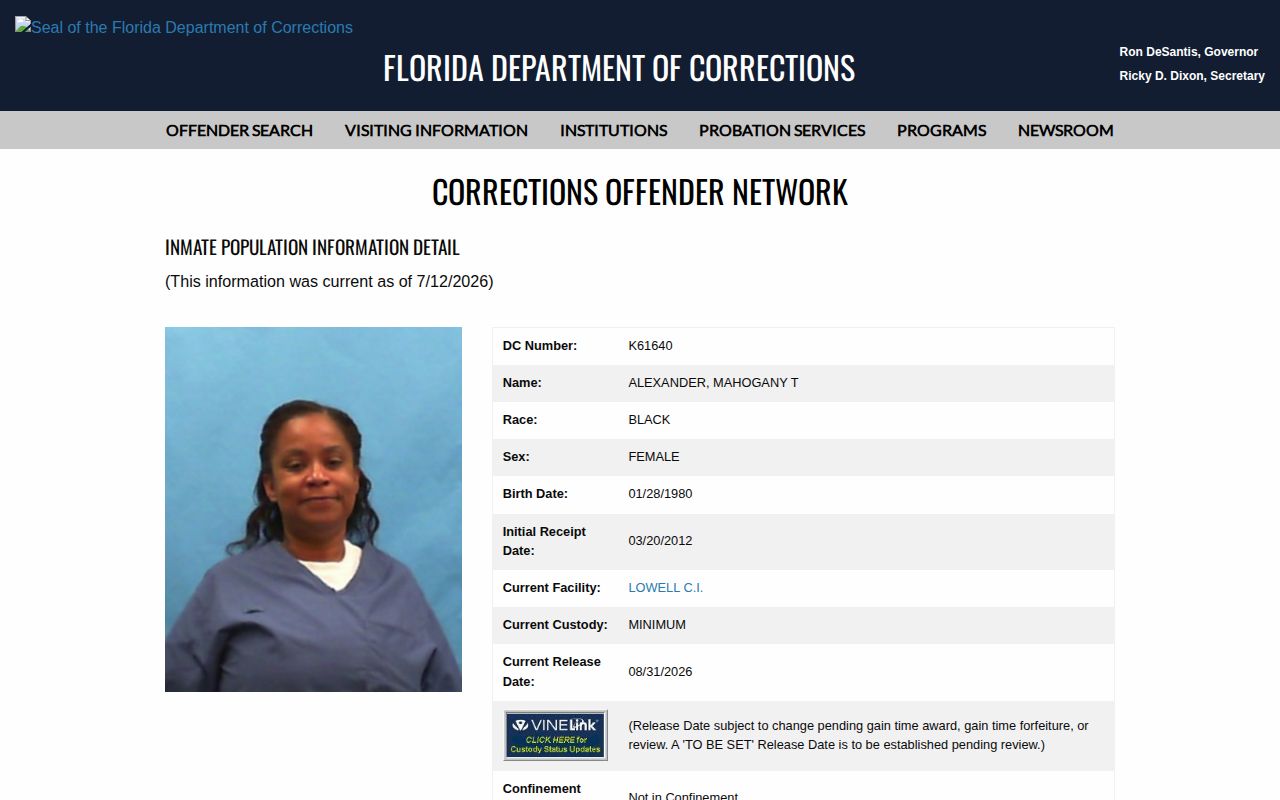
The warning beside the date is as important as the date itself because it directs the reader to expect lawful revision.
Volusia County Jail Release Timing
VCDC physical release can lag a judge's decision. Court must finish, the person must return to the assigned unit, and Corrections must receive the paperwork before processing starts. The county says processing generally takes two to four hours. Since April 29, 2024, releases do not occur from 10 p.m. to 6 a.m. unless a responsible party arrives, checks in with Control, and provides transportation.
That rule affects gate time, not the state prison gain-time calculation. All women physically release from Volusia County Correctional Facility. For a county sentence, contact Case Management or booking staff about the sentencing order and credit. After the event, archive mode can show a release timestamp and InCustody status for the booking.
Note: A court order sets legal authority, while the VCDC timestamp records when staff completed the physical end of county custody.
Confirm Volusia County Release
After an FDC release, use the Inmate Release Information Search and inspect Release Date plus Date Out-Custody. Inclusion in that database alone is not enough because it contains both past and scheduled releases. If community supervision follows, the Supervised Population database may show its type, status, office, and termination date.
For a pending custody change, the Volusia County VINELink inmate search explains notification registration. VINE is an alert channel, not a durable release certificate. The Volusia County release-record route covers the county archive, court docket, and official records request after a VCDC release.
When an FDC date or code remains unclear, contact the Bureau of Admission and Release at 850-488-9167 or dc.release@fdc.myflorida.com. For Volusia county custody, use Case Management at 386-254-1548 or Booking/Bonding/Charges/Arrest at 386-254-1540. Ask the office responsible for that custody rather than sending a state-prison question to the county.
Preserve both the forward-looking and final records when timing matters. The current profile records what FDC projected at that point, while the release detail later records the actual state custody event. For a county booking, pair the court order with the VCDC release timestamp because the judge's authorization and staff's physical processing answer different questions. If a detainer or transfer appears, follow the receiving agency before describing the person as back in the community.
A missing record is not a date. It can reflect a name mismatch, update lag, another custodian, sealed material, or a case that never entered FDC. Recheck identifiers and jurisdiction before concluding that no projected release exists.